
You are moving from a world of fixed nouns to one of fluid verbs. In the coming years, solid things, such as cars and jackets, will keep becoming intangible services and processes. With technology built in, your car becomes a continuously updated service: benefits that adapt to your use and feedback, fierce competition and global innovation.
Insights from International Software Test Institute™
12 Technological Forces Shaping Your Future: Real and Already Emerging
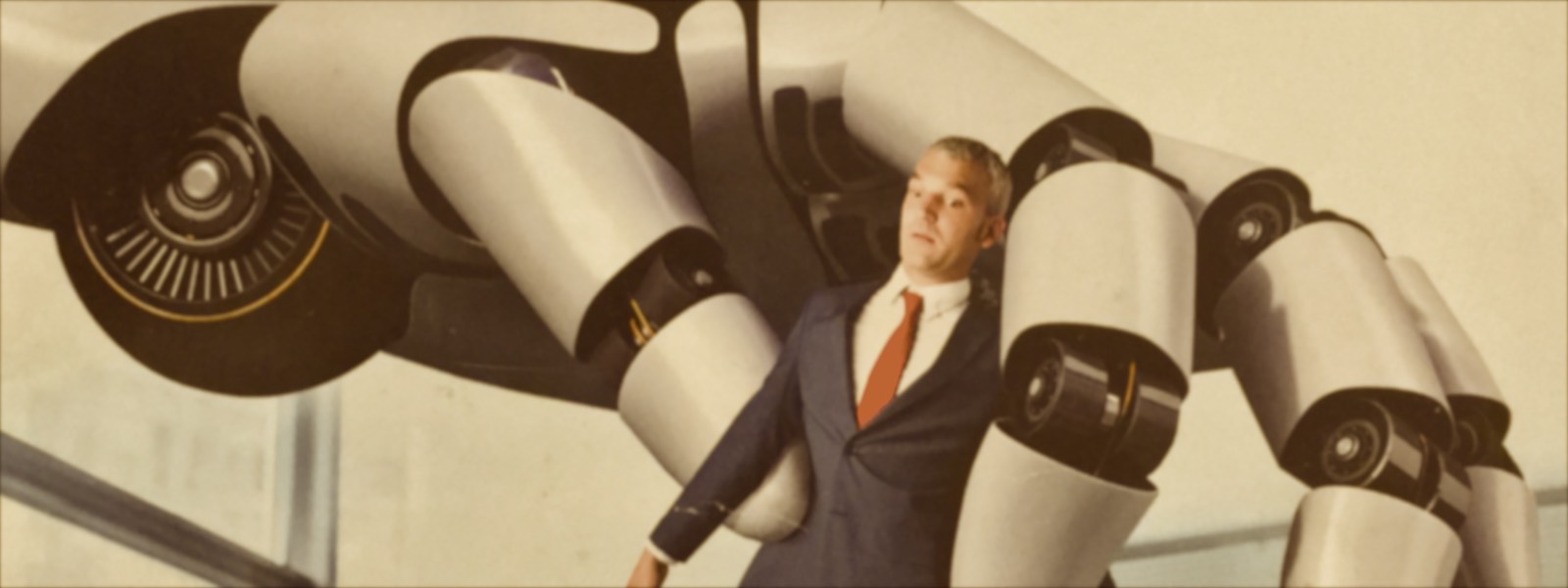
This article, inspired by Kevin Kelly’s The Inevitable, explores 12 forces shaping your future.
These forces describe trajectories, not exact destinations. They do not predict where you will arrive, only the directions you are inevitably heading. Here we go:
1. BECOMING
Behind the scenes, machines upgrade themselves, gradually changing their features and benefits. You may not notice this “becoming.” We tend to project what we know into the future, distorting the new to fit the familiar. That is why early movies resembled stage plays, and early virtual realities resembled movies.
Promising inventions attract naysayers. The bigger the promise, the louder the objections. Remember smart people saying foolish things when the internet and web emerged? In 1994, Time magazine explained why the internet would never go mainstream: “It wasn’t designed for doing commerce”. They missed the point: it was not designed to be one fixed thing. It is becoming whatever you want it to be. In that sense, nothing has happened yet. The internet is still at the beginning of its beginning. It is only “becoming.”
In 2050, old-timers will ask: can you imagine being an innovator or entrepreneur in 2016? Opportunities were wide open. You could take almost any category, add artificial intelligence and put it in the cloud. The preceding 30 years built an excellent platform for great things. What follows will be different and beyond what came before. Today is a wide-open frontier, the best time in human history to begin. You are not late.
2. COGNIFYING
Few things are as influential as making a dumb tool smarter. Even a little useful intelligence can transform an existing process. Three generations ago, our ancestors electrified things. Now you will cognify what was electrified. Almost anything can become new, different and more valuable with extra IQ. Thousands of emerging startups follow a simple plan: take X and add artificial intelligence. Find something you can improve with online intelligence.
Most commercial AI will consist of nonhuman, special-purpose programs. One might drive a car without knowing your work routines. Another might recall every pixel in every YouTube video without translating. These will be narrowly focused, exceptionally smart specialists. Your opportunity is to invent intelligences biology could not evolve: machines that think differently.
The human body cannot match machines’ finest control, attention and precision. Robots and automation offer their greatest benefits by doing what you cannot. You could not make a single chip inside the computer in front of you, but robots you build can. The only reason you buy handmade clothing today is that you value the imperfections people introduce.
The highest-paying professions of the coming decades will depend on automation and machines not yet invented. A few decades ago, you could not have imagined self-driving cars, yet now you are working hard to build them. Do not worry: robots will neither enslave you nor take your job. They will create work you did not know you wanted done. Your human job is to keep making jobs for robots. That task will never end, so you will always have at least this one job.
3. FLOWING
Copies inevitably flow, and a new medium first imitates the one it replaces. Early commercial computers borrowed office metaphors: desktops, folders and files. The second age followed the web, replacing files with linked pages viewed in browsers. In the third age, files, pages and browsers lose significance. Flows and streams become the basic units.
You expect real-time service: a card purchase appearing immediately on your statement, a movie starting now, a text answered today rather than tomorrow. Real-time operation requires flow. Companies work hard on efficiency and productivity, but that is no longer enough. They must save their customers time.
When electric lighting was scarce, poor households burned candles. Once electricity became accessible, candles on the dinner table became a luxury. Abundant copies lose value; what cannot be copied becomes scarce and valuable. So what cannot be copied?
Immediacy: A hardcover book commands a premium for being available sooner, disguised as a premium for its cover. Beta apps and software offer immediacy, too.
Personalization: A concert recording can be tuned to your living room’s acoustics. A publisher can tailor a book to your reading background.
Interpretation: You can earn a living selling instructions and support for free software. When copies cost nothing, explaining what they mean, what you can do with them and how to use them becomes expensive.
Authenticity: You might find a free copy of commercial software without knowing whether it contains bugs or malware. Paying for an authentic copy gives you that same software with intangible peace of mind.
Accessibility: Ownership can be a burden. You must keep things tidy and current. Material may be free but inconvenient to manage. A paid service gives you access to it anywhere.
Embodiment: A digital copy has no physical body. The same words on bright white, cottony paper bound in leather can feel luxurious. People buy tickets for events streamed live for free. Many musicians earn their living from concerts rather than music sales.
Patronage: Devoted audiences want to pay creators. They do so when payment is extremely easy, reasonably priced, clearly beneficial to the audience and directly helpful to the creator.
Discoverability: Work has no value if nobody sees it, whatever its price. Fans spend time and money finding worthwhile work among billions of creations. TV Guide had a million subscribers and earned more than the three major TV networks it covered combined.
Flowing begins with fixed, scarce products that take expertise and time to create. They become free and ubiquitous, then streams of services shared among many people. Finally, creation is inverted: the audience becomes the artist. Notice how easy it has become to compose music or make movies. They are flowing.
4. SCREENING
Web links and tags may be two of the most important inventions of the past 50 years. Each time you link or tag something, you anonymously make the web smarter. Ideas can have social graphs, concepts can have timelines and influence can have networked maps. Information is not an isolated island. It connects past and present.
Books will be written for snippets and remixed pages within an ever-growing universal library greater than its parts. Work on the margins of popularity will find small audiences larger than the near-zero audiences it has now. As civilization’s original information is scanned and linked, your grasp of history and future possibilities will deepen. You will better understand what we, as a species and civilization, know and do not know.
Screens are appearing on every flat surface. You will view things in real time and interact with the universal library using your whole body and mind. A wearable screen such as Google Glass could, for example, show the Eiffel Tower in Paris while you stand in front of it.
5. ACCESSING
Possessions matter less; access matters more than ever. Digital technology and the web turn products into services. When Amazon launched the Kindle e-book reader in 2007, Jeff Bezos called it a service providing access to reading material, rather than a product. Access lets you deliver new things almost in real time. They should cost less, too.
A well-connected crowd of amateurs can match an average solo professional. Existing product benefits can be unbundled and remixed in surprising, delightful ways. Connected products become continuously accessible services. The long-term trend is toward short-term use, making most goods and services candidates for rental and sharing.
Platforms let others build products and services on a shared foundation. Think of a forest ecosystem: each species, or service, depends on the others’ success. That interdependence discourages ownership and promotes access. A platform becomes a multisided market, extending the traditional two-sided buyer-and-seller model.
Dematerialization, decentralization and widespread communication produce more platforms. Platforms are service factories, and services favor access over ownership. Most of what you do on the web or phone already uses cloud computing. Invisible as it may be, the cloud runs our digital lives.
6. SHARING
People online are remarkably willing to share. Working together toward a large goal produces astonishing results. You may not need another Eiffel Tower photo because the community can probably offer a better one. Reddit and Twitter steer public conversation more than newspapers and TV networks. Organized collaboration can outperform ad hoc cooperation. Linux, Apache, 3D Warehouse and Raspberry Pi are examples.
How will creators finance their work? No method has benefited them as much as crowdfunding. Motivated fans become chief marketers, recruiting friends to a campaign. Lending platforms such as Kiva, Prosper and Lending Club achieve repayment rates above 99%, a result traditional finance can only dream of. That encourages people to lend again. Even major Fortune 500 companies crowdsource innovation.
Companies dream of moving from products to sharing platforms. Once there, they must act more like governments: keep opportunities equally accessible and hierarchy minimal. Sharing is not confined to nonprofits. Early Google overtook leading search engines by using amateur web creators’ links. Every hyperlink counted as a vote of confidence in the linked page.
Sharing has an intuitive, often unspoken goal: maximize individual autonomy and the power of people working together. Experts once thought people would never share many things. With the right technology, benefits and conditions, we will share everything. There must be a million more ways to share unexpected things in unexpected ways.
7. FILTERING
Previewing everything invented or created in the past 24 hours would take more than a year of your attention. Filters narrow the overwhelming choices: parents and authorities; publishers and record labels; stores, museums and libraries; brands, governments, cultures and friends. Your own preferences filter choices, too, although traditionally they are the filter most of us use least.
Amazon filters well, offering things you did not know about based on your purchase history and that of similar customers. But seeing only what you already like can make you blind to something different you might love. Imagine a filter saying, “People who disliked those learned to like this.” Intelligent filters will follow wherever there are many choices or a need for personalization. Even a trivial product or service can be personalized. In the coming years, filtering the whole web and cloud will take personalization further.
Companies earn money from your attention. Per hour, the rates are 20 cents for TV, 93 cents for newspapers, 534 cents for books and 360 cents for internet use. Of these media, the internet alone seems future-proof. Those rates mirror how audiences value attention. We have not explored every way to exchange attention and influence, or to pay people for them. You could create ads: keep and share those that generate sales, drop the rest and compensate influential creators with a share of the sales profit. Users would become advertising agencies, just as they have taken on other roles.
Over the past 140 years, commodity prices have fallen about 1% a year. As everything else heads toward zero, uncopyable human experiences become more costly. Everything else becomes a commodity that can be filtered. Humans excel at creating and enjoying experiences. That is no place for robots. It is where we spend and earn money. Use technology to produce commodities, and create and consume experiences to avoid becoming a commodity yourself.
8. REMIXING
Sustainable economic growth usually comes from rearranging existing resources to make them more valuable, rather than finding new resources. Growth comes from remixing. Anything digital will offer undo, rewind and remixing.
Two of the three personalities behind invention, integrators and original mixers, depend on remixing.
Architects: They build from scratch. Elon Musk’s Tesla designs, builds, markets and sells cars using entirely new, unconventional techniques and technologies.
Integrators: They remix proven tactics, often adapting an idea from one industry to another. Spotify’s flat-rate music streaming, for example, was inspired by flat-rate telecommunications subscriptions.
Original Mixers: They use “purple cows” to attract attention. The Breakin`Mozart group, for example, mixes Mozart’s classical music with breakdance.
The more powerful an invention or creation, the more likely and important it is that others will transform and remix it.
9. INTERACTING
Soon, you will enter a virtual training room where an instructor guides your avatar through a class: “See this? Now you do this.” In many ways, augmented reality (AR) classes will surpass real-world classes. Tiny cameras looking back from screens will gain skills to sense and understand you better, enabling cloud servers to offer more personalized service.
Even the dumbest object can improve dramatically with sensors and interactivity. Someone mumbling and moving their hands in the air may be interacting with a device or service. The next step is computers against our skin: wearables. Your body becomes your password. Your digital identity is you.
10. TRACKING
We struggle to understand ourselves and need help discovering who we are. The internet of everything and its cloud are designed to track data. Anything connected to that cloud that can be tracked will be tracked.
Ubiquitous surveillance is inevitable. If we cannot stop tracking, we can make the relationship more symmetrical. Personalization and transparency have a one-to-one relationship. Greater personalization requires greater transparency; absolute personalization requires absolute transparency.
If you remain private and opaque to prospective friends and institutions, expect generic treatment that ignores your specific circumstances. You can retain privacy, but you become an average number. That is why most technologists argue that anonymity, like a trace element, should never disappear completely but should stay as close to zero as possible to maximize personalization and service standards.
Entire industries have emerged from unbundling in recent decades. Technology companies overturned the music industry by separating melodies from songs and sounds from albums. Remember how revolutionary iTunes sold individual songs rather than albums.
11. QUESTIONING
Questioning makes possible what once seemed impossible. Twenty years earlier, most of us would have expected Wikipedia’s random contributions to produce a mess. Instead, it deepened our appreciation of social power. We now care more about collective strength and individuals’ new obligations to the collective.
The impossible begins to feel inevitable. The gap between questions and answers is our ignorance, and it grows exponentially. Science expands that ignorance more than our knowledge. Despite more than 100 billion searches a year in the United States alone, who would have believed 30 years earlier that answering questions for free could become an $82 billion business?
Answers become cheap and questions valuable, reversing the present balance. In 1964, Pablo Picasso anticipated this when he said, “Computers are useless. They only give you answers”. That is why most costly big-data projects badly miss their business cases: useful answers require appropriate questions.
Answer-generating technology will remain essential. Answers will become ubiquitous, instant, reliable and almost free. Technology that helps generate questions will be valued more. Question-makers will drive new fields, industries, brands, possibilities and continents for our restless species to explore. Your questions are more powerful than your answers.
12. BEGINNING
For the first time, the people of this planet are connected in one immense thing: the internet. It will grow larger, but you are alive at the moment it first awakens and emerges.
AI will not become so smart that it enslaves us. Instead, AI, robots, filtering, tracking and the other forces in this article converge with people. Together, humans and machines enter a complex interdependence.
Future generations will envy you. You began giving inert objects small amounts of intelligence, connecting them in a cloud of machine intelligence and linking billions of minds into one supermind. This convergence will be recognized as the largest, most complex and most surprising event on the planet up to that point.